Why you should start mapping the customers’ post-purchase journey
Map the post-checkout customer journey and address gaps to provide your customers with a positive experience.
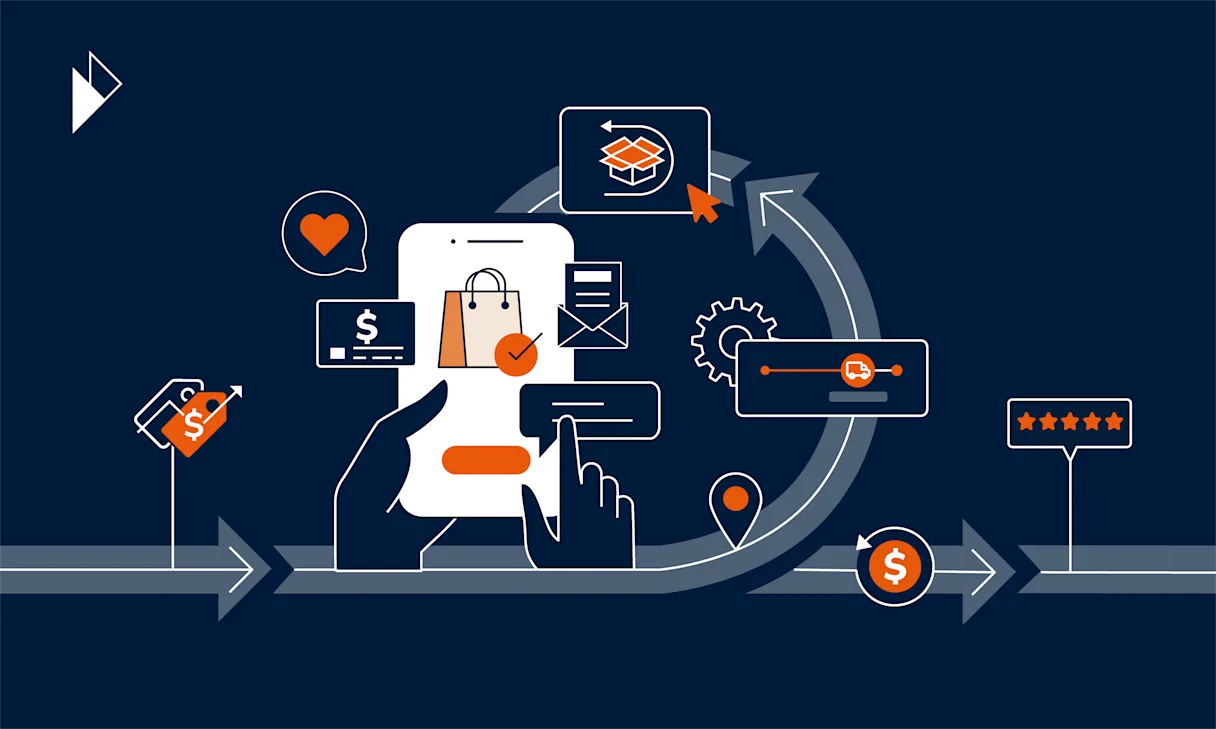
Your customer’s journey doesn’t end once they purchase something from you. For every transaction they have with you, there’s a chance that they might buy again from you. Only when they stop completely, do their journeys with your business end. To extend their journey–and their lifetime value–with your business, you need to ensure that all obstacles are removed.
Accomplishing that requires the mapping of that journey. Once you know the process inside out, you can start to shape it into one that’s as efficient and intuitive as possible. The more seamless it is, the more likely customers will return.
The post-checkout customer journey and its importance for your e-commerce business
The post-checkout customer journey comprises interactions and experiences that a customer has with your brand after they make a purchase. It includes everything from order confirmation, tracking, delivery, feedback, returns, and loyalty programs. E-commerce businesses can easily overlook the journey, but it is a crucial factor in maintaining and extending a customer’s lifetime value.
Here’s a breakdown of why a friction-less post-checkout journey is so important for e-commerce businesses:
It influences customer satisfaction and loyalty. According to recent studies, over 80% of online shoppers expect to receive regular delivery updates. More than 50% of them also said they would not purchase again from a retailer that does not provide order updates. On the other hand, 94% of customers who are satisfied with the post-purchase experience are likely to buy again from the same retailer.
It creates opportunities for cross-selling and upselling. The post-checkout customer journey is the best time to offer relevant products or services to customers. Post-checkout delivery notifications (emails or SMS) typically boast up to 80% open rates–and are considered high-value touchpoints. Through these touchpoints, you can easily insert cross-selling and upselling content like recommendations.
It builds brand awareness and advocacy. The post-checkout customer journey can help e-commerce businesses generate positive word-of-mouth and social proof. Customers who are happy with their experience are more likely to share their feedback, reviews, ratings, photos, or videos on social media or other platforms. This can increase brand exposure, trust, and credibility among potential customers.
![[Clickable banner] - Webinar blog post banner (pre-webinar) midsection href="https://www.parcelperform.com/webinars/maximize-revenue-for-peak-season"](/_next/image?url=https%3A%2F%2Fimages.ctfassets.net%2F024tjke8lcok%2F4Ysbm4HNIGvF748RXZSBDl%2F6db1d8469e02b8273af84111829ce5d5%2F3._Email_Signature_Banner_with_CTA__Save_a_seat___1337x300_px__1_.png%3Fw%3D4011%26fm%3Dwebp%26q%3D75&w=3840&q=75)
Best practices to optimize the e-commerce post-checkout customer journey
Your customers enjoy a seamless shopping experience. It’s the same when it comes to the post-checkout experience. They expect the same seamlessness across all touchpoints and channels. The experience should be adjusted to suit your business, but the fundamentals remain unchanged. Here are some of the essential best practices that you can follow and tweak further down the road.
Essential post-checkout best practices:
Send timely order confirmation and tracking information. This step is the most crucial because it lays a strong foundation for all the other steps that follow. That’s because your customers want to know when their orders are confirmed, shipped, and delivered. Your e-commerce businesses can meet this demand by automatically sending clear and concise delivery notifications that include order details, shipping method, ultra-precise estimated delivery date, tracking number, and link to your branded delivery tracking page so customers can track order status online.
Provide proactive and transparent delivery delay updates. Your customers want to be informed of any changes or delays in their delivery status. That is why your business should take the proactive stance of sending transparent delivery updates via email or SMS that inform customers of any issues or exceptions that may affect the delivery of their orders, such as weather conditions, carrier delays, or customs clearance.
Offer convenient and flexible return and exchange policies. Customers may need to return or exchange their orders for various reasons, such as wrong size, color, or quality. Your e-commerce businesses can offer a convenient self-service and flexible returns process that is easy to understand and use. Your returns costs should also be low enough to provide additional services like free return shipping labels, prepaid envelopes, or drop-off locations for customers to return their orders hassle-free.
Collect and act on valuable customer sentiment data. Customer feedback is essential for your e-commerce businesses–especially when you want to measure customer satisfaction and identify areas for improvement. A customizable rating solution embedded into your data and delivery experience platform can help you understand which part of your delivery experience needs improvement. Once you get the insights you need, you can immediately strategize and implement changes to improve your customer’s post-checkout experience.
Bonus tip: Complete the experience with incentives and benefits. Customer loyalty is the ultimate goal of the post-purchase customer journey. No matter how smooth your customer journey is, rewarding customers with incentives and benefits will make the experience much more attractive for your customers. For example, you can create programs that provide customers with points, discounts, free shipping, gifts, or exclusive access to new products or services–and keep your customers excited and coming back for more.
Optimize the end-to-end post-checkout customer journey with just one platform
Mapping your customer’s post-checkout journey can reveal some interesting insights. However, it will also highlight the complex layers behind each touchpoint. For instance, making sure every customer has a consistent delivery notification experience requires the tedious collection and normalization of delivery data from all your carriers, as each carrier has different ways of tracking parcels.
There are solutions out in the market that provides such parcel tracking services. However, these platforms are standalone solutions and may only cover one or two aspects of the entire post-checkout experience. For true end-to-end visibility and control, you would need to subscribe to other services that may not integrate well with your existing solutions.
That’s where Perform.AI comes in. Perform.AI’s leading data and delivery experience platform is built using industry best practices and has several features built-in. With just one integration, you instantly unlock a future-proof and consistent post-checkout experience that your customers expect. And because all of these features are found in one platform, it is also incredibly easy to manage.
To learn more about Perform.AI and how we can help your business streamline and improve your post-checkout experience, book a demo with our e-commerce experts. Let us give you a thorough walkthrough of our platform and show why we can help you accelerate your business.