Stop Managing Peak Season, Start Predicting It: How E-Commerce AI Transforms Reactive Operations
Stop fighting peak season chaos. Use a unified AI platform to shift from reactive to predictive e-commerce operations.
The E-Commerce Peak Season Crisis: Why Reactive Operations Are Failing
For most e-commerce leaders, peak season approach is a familiar ritual: assemble a war room, brace for impact, and react. The strategy relies on siloed dashboards, frantic calls, and institutional knowledge of key team members. But in AI Commerce, this reactive posture isn't just inefficient—it's a path to failure. With Cyber Week hitting record $314.9 billion in global sales according to Salesforce, operations generate millions of data points every second. No human team can manually process this deluge and stay ahead.
The brands winning the next decade aren't those who react fastest, but those who don't have to react at all. They're making a fundamental shift from reactive operations to predictive excellence powered by AI. For the C-suite, the choice is stark: continue managing by looking backward, or start shaping the future with predictive control.
The E-Commerce Integration Crisis: Why Fragmented Systems Fail at Scale
The challenge facing modern e-commerce operations isn't just peak season volume—it's exponential complexity during high-stakes periods. With holiday sales reaching $241.4 billion and mobile driving 53.1% of sales, according to Adobe Analytics, operational demands have outpaced traditional management.
Consider the reality: today's e-commerce leaders orchestrate thousands of global carriers, multiple fulfillment centers, complex inventory systems, and dynamic pricing—all while customer expectations for real-time visibility have never been higher. When systems operate in isolation, the result is "operational blindness"—inability to see problems until they cascade into failures.
The E-Commerce Customer Experience Breakdown During Peak Season
Fragmentation becomes most painful during peak events. Cyber Monday saw record $13.3 billion in sales, but many retailers discovered their systems couldn't handle integration complexity at scale. The breakdown pattern is predictable:
The Checkout-to-Fulfillment Gap: Your checkout system promises delivery dates based on historical data, but can't access real-time capacity from fulfillment networks. Result: over-promising leading to failures.
The Carrier Performance Blind Spot: Your logistics management receives tracking updates from carriers, but operates isolated from customer service platforms. When performance degrades, support discovers issues only after complaints.
The Inventory-Marketing Disconnect: Marketing launches campaigns based on projected inventory, but lacks real-time visibility into fulfillment capacity and carrier performance. Result: successful campaigns creating operational chaos.
The Human Bottleneck in E-Commerce Operations
Your teams orchestrate immense complexity—managing relationships and data from 1,000+ global carriers, multiple warehouses, thousands of shipping routes—while meeting increasing expectations. Relying on manual analysis here is like navigating a superhighway on a bicycle.
Familiar symptoms include:
Blindsided by carrier performance dips, discovering issues only after customer complaints
Making critical decisions on last week's data, unable to see emerging trends
Teams spending 80% of time firefighting 20% of problematic shipments
This isn't personnel failure; it's systems failure. McKinsey's 2024 survey shows supply chain visibility remains a top concern for leaders. When data fragments across dozens of spreadsheets and portals, you're structurally incapable of seeing the bigger picture.
The E-Commerce AI Reality Check: Why Disconnected Systems Fail
Early AI adopters reduced logistics costs 15%, improved inventory 35%, and enhanced service levels 65% according to McKinsey. However, these results require AI accessing unified, real-time data across all touchpoints.
Most brands attempt AI on fragmented architectures, creating "AI on islands"—intelligent systems optimizing individual processes but lacking system-wide intelligence. Result: sophisticated algorithms making decisions on incomplete information, creating new problems while solving others.
The Shift to E-Commerce Predictive Excellence
Breaking the human bottleneck requires fundamentally changing your paradigm. Predictive excellence means moving from "What happened?" to "What's about to happen, and what should we do?" It transforms delivery from disconnected events into an intelligent, self-correcting system.
Reactive vs. Predictive E-Commerce Operations
The Reactive Way: WISMO calls flood customer service from a specific region. Teams investigate, discovering hub congestion. By the time you react—pausing shipments or notifying customers—hundreds of promises are broken, trust damaged.
The Predictive Way: AI constantly monitors all data points including transit times. It flags statistically significant slowdowns for parcels through specific hubs. Performs root cause analysis and triggers alerts. Simultaneously provides recommendations: "Proactively reroute 15% of volume through Carrier B to avoid SLA breaches." Problems solved before impacting customers.
Building E-Commerce Delivery Excellence Through Intelligence
Predictive excellence requires systematic intelligence building:
Stage 1: E-Commerce Checkout Optimization with Smart Logistics
Foundation begins at checkout. Instead of static promises based on averages, intelligent systems integrate real-time carrier data, weather, and fulfillment capacity for dynamic delivery promises customers trust.
Focus areas:
Real-time EDD accuracy through carrier integration
AI-powered routing based on performance and preferences
Automatic delivery option adjustment based on constraints
Stage 2: E-Commerce Post-Purchase Excellence Through Proactive Communication
Transform post-purchase experience from reactive service to proactive engagement. Instead of waiting for inquiries, intelligent systems predict communication needs and deliver personalized updates automatically.
Capabilities include:
Predictive WISMO prevention through proactive updates
Smart messaging adjusting to preferences and complexity
Automated exception management with resolution workflows
Stage 3: E-Commerce Analytics Driving Customer Retention
Transform operational intelligence into loyalty and growth. Advanced analytics identify patterns driving satisfaction and retention, creating feedback loops continuously improving operations.
The E-Commerce AI Command Center: Unified Intelligence Platform
Predictive excellence requires a central nervous system unifying all data and providing single-source intelligence. This requires three core capabilities:
1. Your 24/7 E-Commerce Operations Watchtower
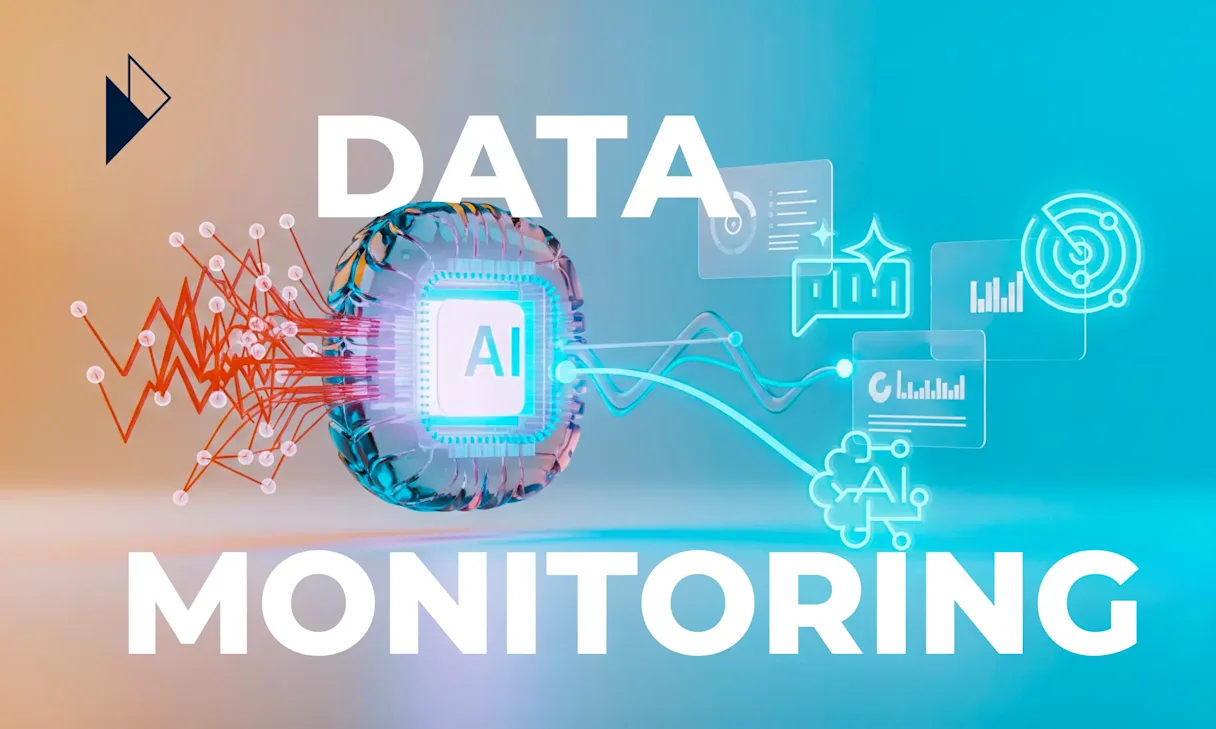
AI monitoring gives you the power of 20 analysts watching data around-the-clock. It monitors 30+ metrics across your entire journey—from checkout to returns. When KPIs risk breaching SLAs, systems trigger automatic alerts.
Advanced monitoring includes:
Multi-carrier tracking across all service levels
Customer satisfaction prediction for at-risk orders
Capacity constraint detection before impacting promises
2. Your AI-Powered E-Commerce Strategic Advisor
Combat data overload with AI delivering fresh insights. Daily summaries highlight important trends, performance shifts, and opportunities across markets and logistics priorities. Intelligence becomes action with prioritized recommendations helping fix issues and optimize workflows fast.
3. Your E-Commerce Operational Co-Pilot
Empower your entire organization through simple interfaces. Teams get immediate answers to complex questions—whether customer service checking return status or logistics managers monitoring carrier integration. This frees talent for strategic priorities.
E-Commerce Platform Integration: Building Unified Foundations
AI effectiveness depends on data foundation quality. Most operations suffer from "data fragmentation syndrome"—critical information trapped in isolated systems.
The True Cost of E-Commerce Systems Fragmentation
Fragmented systems create hidden costs:
Integration Maintenance: Each point solution requires ongoing work with compounding costs
Data Inconsistency: Different systems use different standards requiring manual reconciliation
Decision Delays: Scattered data requires time-consuming collection
Scalability Constraints: Point solution limitations create growth bottlenecks
The E-Commerce Competitive Advantage
Organizations implementing integrated, AI-powered platforms gain advantages:
Network Effects: Systems become more valuable processing more data
Learning Advantages: Teams develop expertise leveraging predictive insights
Experience Differentiation: Superior experiences create difficult-to-replicate loyalty
Master Your E-Commerce Future, Don't Just Manage It
The era of dashboard management is over. Modern commerce complexity demands intelligent, predictive approaches. Leaders embracing this shift won't just survive peak season chaos—they'll master it, turning complexity into competitive strength.
At Perform.AI, we've built the definitive command center for this transition. Our AI Decision Intelligence unifies your data, predicts challenges, and recommends actions—ensuring you don't just win today but build resilient, intelligent operations for AI Commerce's future.
Book a demo to see how AI Decision Intelligence can revolutionize your e-commerce operations before peak season.
Frequently Asked Questions
What's the difference between BI dashboards and AI-powered intelligence?
BI dashboards are reactive, displaying historical data showing what happened. AI-powered intelligence is proactive, analyzing real-time data to predict what's about to happen and providing actionable recommendations. It moves teams from analysis to action, enabling predictive rather than reactive decisions.
How does AI help manage e-commerce peak season specifically?
During peak season, AI-driven systems predict logistics bottlenecks before they're critical, automatically recommend rerouting to avoid congestion, provide accurate delivery promises despite network strain, and handle inquiry surges with intelligent automation—preventing service team overwhelm.
Are AI-powered operations only for large enterprises?
While designed for enterprise complexity, predictive excellence principles are universal. The core benefit—shifting from reactive to proactive operations—provides competitive advantage to any e-commerce business looking to scale efficiently and improve customer experience.
What data powers AI-driven e-commerce operations?
Powerful AI requires unified data foundations including real-time and historical data from your entire ecosystem: parcel tracking from all carriers, warehouse and fulfillment data, order management systems, and customer feedback.
How does AI provide clear ROI for e-commerce operations?
ROI comes through multiple channels: reduced operational costs from proactive resolution (fewer redeliveries), lower service costs from WISMO reduction, increased revenue from higher conversion and retention, and improved strategic decisions based on predictive insights rather than historical reports.