Post-Holiday E-commerce: How AI Can Retain 30% of Your Returns Revenue
Stop the "Great Unboxing" from draining profits. Use AI to flip 30% of January refunds into retained revenue exchanges.
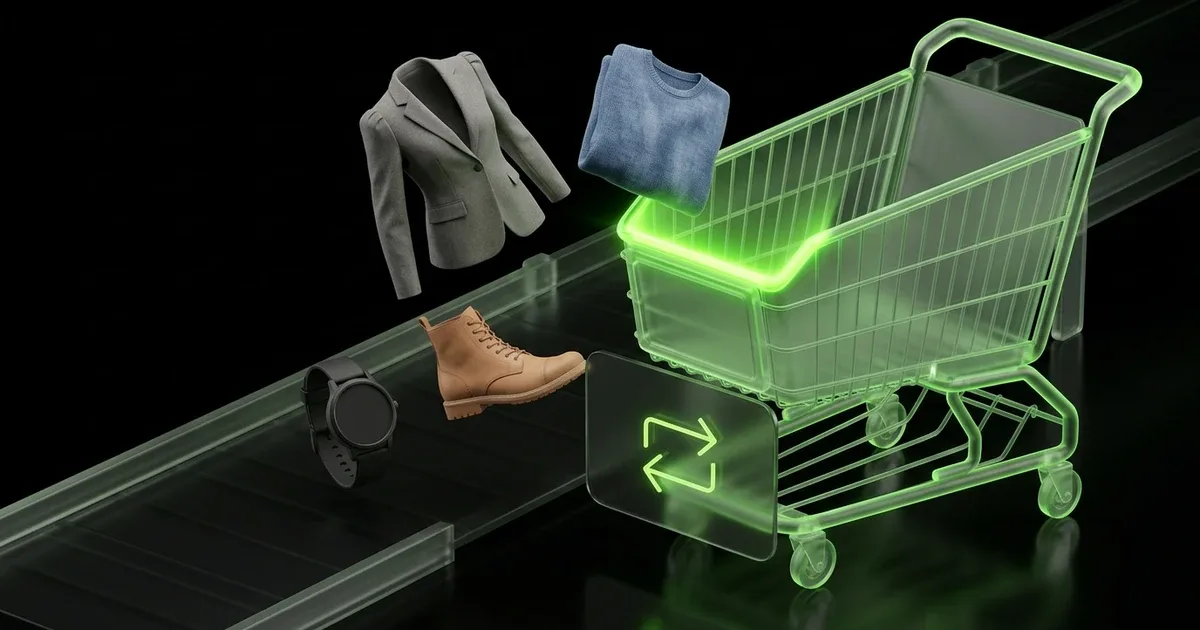
January in e-commerce is often viewed as a hangover after the Q4 revenue feast. As gift-giving subsides, the "Great Unboxing" begins—a massive wave of reverse logistics that threatens to wipe out a significant portion of holiday gains. According to the National Retail Federation's 2022 Consumer Returns Report, total returns reached $816 billion, representing 16.5% of all retail sales. During holiday periods, return rates surge even higher, with retailers expecting 17.9% of merchandise to be returned, translating to nearly $171 billion.
For many CEOs and e-commerce leaders, this period represents a massive operational drain—a pure cost center managed by rigid policies and manual warehouse labor. This reactive approach suffers from what we call "The Refund Default": the operational tendency to process a return as quickly as possible by issuing a refund, simply to clear the queue. While efficient in the short term, The Refund Default is a strategic failure. It treats a return as the end of a customer journey rather than a critical touchpoint.
In the emerging era of AI Commerce, where customer retention can cost 5 to 25 times less than acquisition, treating returns purely as a logistics problem is no longer viable. Leading brands are fundamentally rethinking reverse logistics, transforming it from a margin-killer into a sophisticated engine for revenue retention and data acquisition.
Why is "The Refund Default" silently eroding your Q1 margins?
The Refund Default occurs when a brand's technology stack is disconnected. When the e-commerce platform, logistics teams, and financial systems don't communicate in real-time, the safest and fastest operational path is to refund the customer to close the ticket.
This "safety" is expensive. According to Optoro research, processing a return can cost up to 66% of an item's price—factoring in processing, potential markdowns, and the reality that less than half of returns are resold at full price. When a customer receives a generic label and eventually a refund, the brand not only absorbs this loss but also forfeits the original revenue and, crucially, the opportunity to re-engage.
Furthermore, a poor returns experience directly drives churn. Queue-it's 2024 loyalty research found that 84% of online shoppers would say goodbye to a retailer after a bad returns experience. In an environment where customer acquisition costs continue to rise, risking the majority of your newly acquired holiday customers due to a clunky January returns process is a strategic unforced error. The "Refund Default" doesn't just leak revenue today; it caps growth tomorrow.
How do leading brands flip 30% of refunds into retained revenue?
The strategic pivot required is moving from "processing returns" to "managing exchanges." This requires a unified Returns Experience that integrates with inventory and order management systems to present intelligent alternatives to a cash refund at the exact moment of initiation.
Rather than a static PDF label, best-in-class retailers use interactive, self-service portals that guide the customer through a retention workflow. If a customer selects "Wrong Size" as the return reason, the system should immediately check real-time inventory and offer an instant "One-Click Exchange" for the correct size before presenting a refund option.
More advanced strategies involve incentivized store credit. By offering an additional 5-10% bonus value for choosing store credit over a refund to the original payment method, brands can significantly increase revenue retention. According to nShift Returns data, retailers implementing digital returns processes with easy exchange functionality can convert up to 30% of returns into exchanges, directly protecting top-line revenue while ensuring the customer remains within the brand ecosystem.
What strategic data is hidden in your returns workflow?
Beyond immediate revenue retention, a sophisticated returns process is a vital listening channel. "The Refund Default" usually captures only the bare minimum data—often just a generic "didn't like it" reason code.
Optimized returns experiences treat this interaction as a high-value survey. By offering an easy, digital interface, brands can capture granular data without adding friction: Was the fit too large specifically in the shoulders? Was the color different from the website image? Is this a VIP customer returning their first item, or a serial returner exhibiting "wardrobing" behavior? Did the return happen because delivery arrived too late for the intended event?
When this data is harmonized into a unified platform, it becomes predictive. AI Decision Intelligence can analyze these patterns to flag products with emerging quality control issues before thousands more units are shipped, or identify customers who might need a personalized "win-back" offer rather than a standard refund notification.
According to the National Retail Federation's 2022 report, for every $1 billion in sales, the average retailer incurs $165 million in merchandise returns. Of those returns, 10.7% are fraudulent. The ability to automatically flag suspicious return patterns—such as returning different items than what was shipped, or unusual frequency of high-value returns—without adding friction for legitimate customers is becoming a critical competitive advantage.
What does the future hold for AI-driven reverse logistics?
As we look toward 2026 and beyond, AI will move from analyzing past returns to predicting future ones. We are approaching a state where AI agents will be able to assess a customer's cart before checkout and predict the likelihood of a return based on their history and the specific SKUs selected.
This will allow for dynamic policy adjustments—perhaps offering free returns to a low-risk VIP while applying a modest restocking fee to high-risk profiles for the same item. The goal isn't to punish customers but to align incentives: Prime AI research indicates that 92% of consumers would repurchase if the return process is seamless, making it essential to protect the experience for loyal customers while managing abuse.
Practical Guidance for E-commerce Leaders
To turn the upcoming January returns surge into an opportunity, leaders should prioritize three immediate actions:
Audit your "Refund Default" rate. What percentage of your returns currently end in a cash refund vs. an exchange? If you don't know this number, you have a blind spot in your revenue retention strategy.
Integrate returns into the post-purchase journey. Stop treating returns as a separate, disconnected event. The ability to initiate a return should be seamless from the original order tracking page, maintaining brand consistency throughout.
Empower Customer Service with visibility. Reduce "Where Is My Return?" (WISMR) inquiries—which can account for a significant portion of post-holiday contact volume—by providing proactive status updates on return shipping and refund processing, just as you do for outbound deliveries.
The "Great Unboxing" is inevitable. Whether it becomes a margin-destroying tsunami or a managed channel for customer retention depends entirely on the intelligence of the infrastructure you build today. The question isn't whether January returns will come—it's whether your systems are sophisticated enough to turn them into opportunities. To explore how leading brands are building their AI Commerce infrastructure, book a demo with our team.
Frequently Asked Questions
1. What is the difference between "Where Is My Order" (WISMO) and "Where Is My Return" (WISMR)?
WISMO refers to customer inquiries about outbound deliveries to them, while WISMR refers to inquiries about inbound returns back to the merchant. Both are major drivers of contact center volume, with WISMR inquiries often spiking in January due to post-holiday returns.
2. How does promoting exchanges over refunds impact long-term customer value (CLTV)?
Promoting exchanges keeps the customer engaged with the brand and the product, rather than severing the relationship with a refund. Research shows that customers who have a seamless exchange experience are significantly more likely to purchase again, increasing their Lifetime Value compared to those who simply receive a refund and leave.
3. Why is a unified data foundation necessary for effective returns management?
Without a unified data foundation, returns data is siloed from initial order data, making it impossible to automate exchanges (which requires knowing what was originally bought and what is currently in stock) or detect fraud (which requires analyzing a customer's complete history). Unified data is the prerequisite for moving from manual processing to intelligent automation.
4. Can AI really detect return fraud without insulting legitimate customers?
Yes, modern AI uses granular data patterns—such as returning different items than what was shipped, or unusual frequency of high-value returns—to flag only the highest-risk transactions for manual review. This allows the vast majority of legitimate customers to enjoy an instant, frictionless returns experience while still protecting the brand's margins.
5. What is the strategic future of reverse logistics in an AI Commerce world?
Reverse logistics will shift from a reactive cost center to a predictive intelligence source. Leading brands are beginning to use AI to predict return probability at the point of checkout, dynamically adjusting offers and policies in real-time to maximize profitability while maintaining a personalized customer experience.