The Scalability Trap: How Manual Carrier Data is Costing Your Dropshipping Business
Manual carrier identification is a 'Scalability Trap' for dropshippers. See how AI automation fixes it & saves margins.
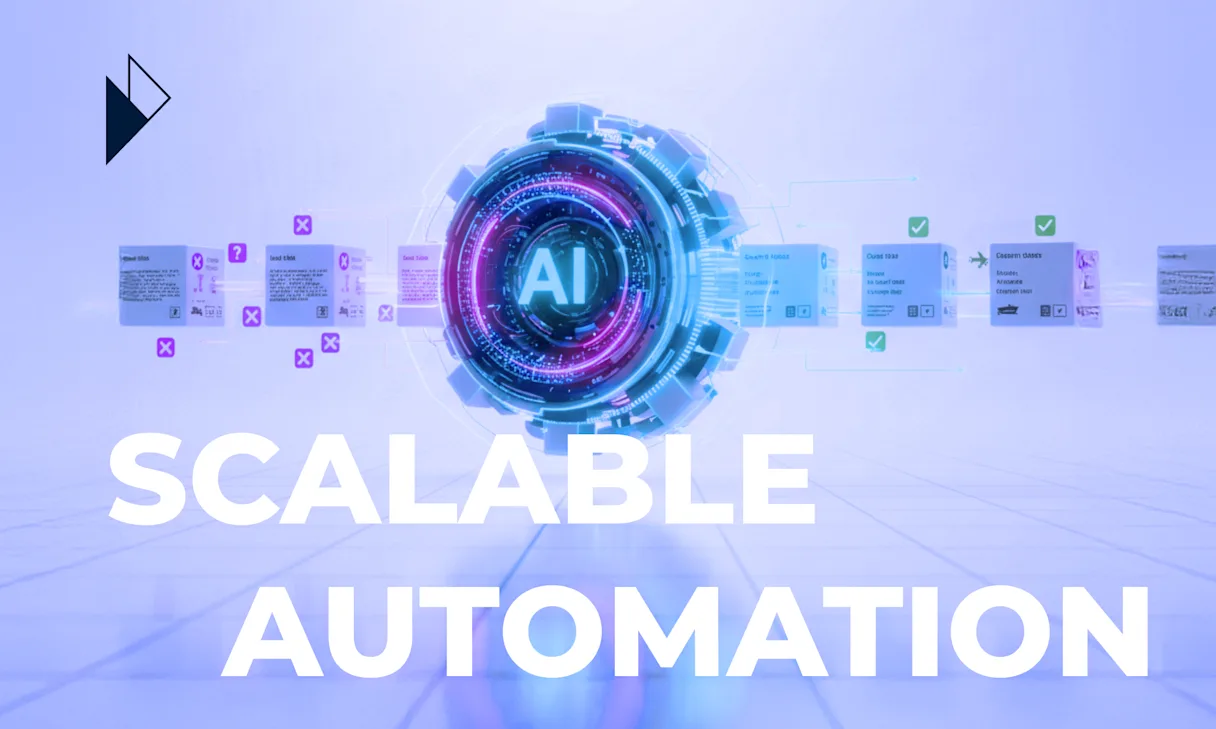
For dropshipping businesses sourcing from AliExpress, CJDropshipping, and multiple international suppliers, growth should be exciting. But scaling reveals a critical flaw unique to dropshipping: the more you sell, the more time your team wastes deciphering tracking numbers like "LY123456789CN", "SF8472938472", or "YT2837492834TR". The core problem? Every supplier uses different carrier formats, and your team manually identifies each one. Poor data quality costs organizations an average of $12.9 million annually (Gartner), and for dropshippers managing 7-15 different suppliers, this cost materializes as endless manual work.
This isn't a minor inefficiency. When your order volume doubles from 100 to 200 daily orders, your operations team must also double just to identify whether "LS123456789CN" is China Post, ePacket, or Yanwen Express. This direct link between order volume and headcount is the Scalability Trap—a dropshipping curse where operational costs grow in lockstep with revenue, destroying the 10-30% profit margins dropshippers fight to maintain.
The Strategic Context: Why Manual Work Kills Dropshipping Growth
In the past, manually identifying carriers was manageable when dropshippers processed 20 orders daily. In the age of AI Commerce, where 23% of purchases are influenced by AI agents, it's become a critical vulnerability. AI shopping assistants evaluate delivery reliability in real-time—they won't choose retailers with inconsistent or delayed tracking information, symptoms directly caused by manual carrier identification.
When your team spends 5 minutes per order figuring out if a tracking number belongs to Turkey Post or PTT Kargo, it introduces fatal delays. For dropshippers whose reputation depends entirely on data from Shenzhen warehouses and Istanbul suppliers, this manual process is devastating. It doesn't just increase costs—it signals to AI buyers that your dropshipping operation can't scale reliably.
The Old Way vs. The Smart Way: Dropshipping Operational Scaling
For dropshippers, breaking free from manual carrier identification is the difference between profitable growth and bankruptcy.
The Old Way (Manual Carrier Chaos):
Hiring Data Janitors: As orders increase from 100 to 1,000 daily, you're forced to hire 10x more staff just to Google "what carrier is LY tracking number" thousands of times. Each employee costs $3,500-4,500 monthly, destroying margins.
Constant Context Switching: Your team jumps between supplier portals, Google searches, and carrier websites. Workers lose 23 minutes refocusing after each switch (American Psychological Association), meaning 40% of their day is wasted on reorientation, not actual work.
Accepting Tracking Black Holes: 15-20% of orders from lesser-known suppliers become "untrackable" because no one recognizes carriers like "Sunyou" or "Flyt Express." This drives WISMO tickets up 40%, costing $5.50 per ticket.
The Smart Way (AI-Powered Scaling):
Virtual Operations Army: AI carrier identification instantly recognizes tracking formats from 1,100+ carriers. What takes humans 5 minutes happens in milliseconds—processing 10,000 orders as easily as 10.
Fearless Supplier Expansion: Add that new Vietnamese supplier or Turkish jewelry vendor without fear. The AI absorbs data complexity from China Post, Vietnam Post, PTT Posta, and hundreds more. Scale 10x without hiring a single person.
Flat Operational Costs: Your costs stay fixed whether processing 100 or 10,000 orders daily. Automation reduces operational costs by 20-30% (Deloitte), letting you reinvest in marketing instead of manpower.
How AI Carrier Identification Saves Dropshipping
The solution to dropshipping's scalability trap is AI Carrier Identification—an infinitely scalable system that automates the most tedious task in dropshipping logistics.
Here's how it transforms your operation:
1. Universal Ingestion: The system pulls tracking data from all your suppliers—AliExpress CSV exports, CJDropshipping APIs, Spocket webhooks—even when the "carrier" field is blank, wrong, or in Chinese characters.
2. Instant Pattern Recognition: AI analyzes each tracking number's format. "LY123456789CN"? That's China Post. "YT2837492834TR"? Turkey Post. "420941159505500236280494920441"? USPS from your US print-on-demand supplier. The AI knows patterns from 1,100+ global carriers, including obscure ones like Cainiao, J&T Express, and 4PX.
3. Automatic Assignment: The correct carrier gets assigned in milliseconds, enabling proper tracking. No human intervention, no Googling, no guessing.
This process that consumed 5 minutes per order (83 hours for 1,000 orders) now happens instantly, saving $2,075 in daily labor costs at scale.
The Measurable Impact for Dropshipping Businesses
Automating carrier identification delivers immediate, quantifiable returns for dropshippers:
Dramatic Cost Reduction:
Labor Savings: Eliminate 5 minutes of manual work per order. At 1,000 daily orders, save 83 hours or $2,075 daily
Reduced WISMO: Cut support tickets by 60% when all packages are trackable
No Scaling Headcount: Process 10,000 orders with the same team that handled 100
Unlock True Scalability:
Test New Suppliers Risk-Free: Add suppliers from Pakistan, Bangladesh, or Eastern Europe without operational overhead
Enter New Markets: Expand to new countries knowing their local carriers are covered
Handle Peak Seasons: Black Friday volume increases don't require emergency hiring
Competitive Advantage:
100% Tracking Coverage: Every package trackable, regardless of origin
Faster Updates: Customers get tracking info immediately, not after manual processing
AI Commerce Ready: Clean data makes you visible to AI shopping agents
MIT research shows AI reduces supply chain operational costs by 15-20%. For dropshippers operating on thin margins, this efficiency gain determines survival.
Real Dropshipping Example: From 100 to 10,000 Orders
Consider a real dropshipper's journey:
At 100 daily orders:
2 employees spending 50% of time on carrier identification
Monthly cost: $3,500 in labor
15% untrackable orders generating complaints
At 1,000 daily orders (without AI):
Need 20 employees for carrier identification alone
Monthly cost: $35,000 in labor
Staff turnover from mind-numbing work
Growth stalls due to operational burden
At 10,000 daily orders (with AI):
Same 2-person operations team
Monthly cost: Still $3,500
100% tracking coverage
Team focuses on supplier relationships, not data entry
The difference? $420,000 annual savings that fund expansion into new markets, better suppliers, and marketing that actually drives growth.
The Solution: Breaking Free from Manual Chaos
Your dropshipping business shouldn't be limited by how fast humans can Google tracking numbers. Your team should negotiate with suppliers, optimize logistics routes, and improve customer experience—not copy-paste tracking codes.
Perform.AI's Logistics Experience with AI Decision Intelligence is built specifically for dropshipping complexity. It handles carriers from 100+ countries, recognizes formats in any language, and scales infinitely without additional cost.
Take Action: End Your Scalability Trap Today
Every day you delay costs real money. If you're processing 500+ orders daily and still manually identifying carriers, you're wasting $1,000+ daily in labor—that's $365,000 annually. But the real cost is missed growth. While you're hiring data clerks, competitors using AI are doubling their business.
Calculate your exact savings: Take your daily order volume, multiply by 5 minutes, multiply by your hourly labor cost. That's what manual carrier identification costs. Now imagine reinvesting that into growth.
Book your personalized demo today and see how leading dropshippers process 10,000+ daily orders without hiring armies of data clerks. In 30 minutes, watch AI identify carriers from China, Turkey, Vietnam, and 50+ countries instantly—transforming your scalability trap into sustainable growth.
Frequently Asked Questions
What exactly is the 'scalability trap' in dropshipping?
The scalability trap occurs when dropshippers must hire proportionally more staff as order volume grows. If you need 2 people to process 100 daily orders, you'll need 20 for 1,000 orders—making growth unprofitable. This happens because each supplier uses different tracking formats. Your team manually identifies whether "RT328746287SG" is SingPost or whether "LZ849372984CN" is ePacket or China Post. With labor costs of $25-30/hour, this manual work destroys the 10-30% margins dropshippers operate on.
How does AI identify carriers from just a tracking number?
AI analyzes the pattern and format of tracking numbers to identify carriers. Every carrier has unique formats—China Post starts with "L" followed by letters and numbers ending in "CN", while Turkey Post uses "YT" prefixes. The AI system has learned patterns from 1,100+ carriers worldwide, including obscure ones dropshippers use like Yanwen, Cainiao, and SF Express. What takes humans 5 minutes of Googling happens in milliseconds.
Can AI handle tracking numbers from lesser-known international carriers?
Yes. The system recognizes carriers most dropshippers have never heard of—J&T Express from Southeast Asia, Flyt Express from China, Poczta Polska from Poland. It covers 1,100+ carriers across 100+ countries, constantly learning new formats. When your supplier starts using a new regional carrier in Bangladesh or Romania, the AI already knows it.
How much does manual carrier identification really cost?
At scale, it's devastating. Processing 1,000 daily orders requires 83 hours of manual work (5 minutes per order). At $25/hour, that's $2,075 daily or $62,250 monthly just for carrier identification. This doesn't include costs from errors, delayed tracking updates, or increased WISMO tickets from untrackable packages.
What happens when suppliers provide wrong carrier information?
This is common in dropshipping—suppliers mark everything as "China Post" when it's actually ePacket, Yanwen, or Cainiao. AI doesn't rely on supplier-provided carrier names. It analyzes the tracking number format itself, correctly identifying the actual carrier regardless of what the supplier claims. This ensures 100% tracking accuracy even with unreliable supplier data.
How does fixing carrier identification help compete with Amazon?
Amazon's advantage isn't just fast shipping—it's perfect tracking visibility. By achieving 100% tracking coverage through AI carrier identification, dropshippers can provide Amazon-level transparency despite using multiple international suppliers. When AI shopping agents evaluate retailers, they see your reliable tracking data, not the chaos behind it. You compete on transparency and reliability, not just speed.