AI Returns Management: How Agents Triage and Route Ecommerce Returns
Returns are a massive cost center. AI agents can triage and route them automatically, turning a problem into an
AI Returns Management: Triaging E-commerce Returns
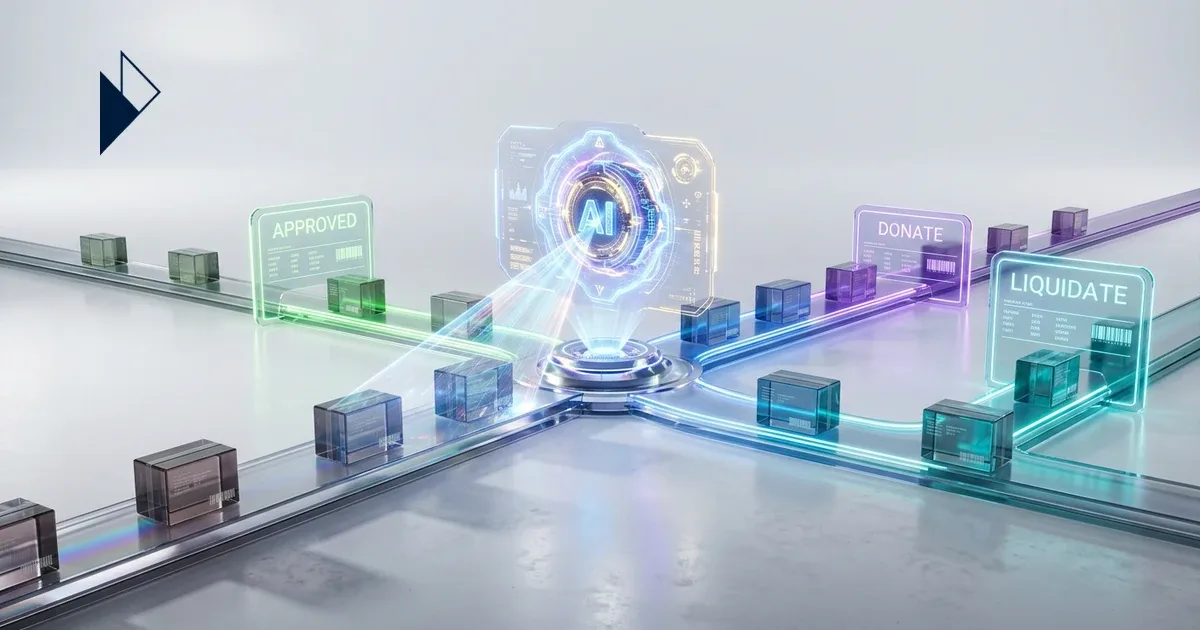
Average reverse logistics rates are projected to reach 24.5% in 2025. Treating this volume as an unavoidable cost of doing business breaks operations teams, accelerating the shift toward agentic commerce. AI returns management stops the margin leak by analyzing reason codes, item value, and customer history to route requests before they hit a human queue.
The financial impact extends far beyond the cost of shipping an item back. The true drain lies in the labor cost of inspecting items, the support cost of handling "Where Is My Refund?" (WISMR) inquiries, and the lost revenue when a frustrated customer abandons the brand.
The Breaking Point for Manual Returns Processing
In the early days of an e-commerce business, managing returns manually is feasible. A customer emails, a support agent reviews the order in one system, creates a Return Merchandise Authorization (RMA) in another, and emails a label. The process is personal but slow, inconsistent, and impossible to scale.
As order volume grows, this manual workflow breaks. Customer service agents spend their days toggling between screens, copying and pasting tracking numbers, and making judgment calls based on incomplete information. Is this a high-value customer who should get an instant refund? Is the reason for return suspicious and indicative of potential return fraud? Without unified data, every decision is a guess. The result defaults to a one-size-fits-all policy that treats your most loyal customers the same as first-time buyers, eroding trust and missing opportunities.
How AI Agents Augment the Returns Queue
The first step for ambitious brands is returns automation, typically through a self-service returns portal. This structures the initial request. However, true operational efficiency requires intelligent triage and routing.
In the era of agentic commerce, the engine goes beyond simple rule-based automation. It uses machine learning models to analyze data points and execute actions. The AI agent acts as a force multiplier for your human agents, extending their reach.
An effective AI agent analyzes unstructured data from the customer's comments, evaluates images submitted as proof of damage, and cross-references this information with the customer's order history and lifetime value. The system builds a complete picture of the return request in milliseconds.
How AI Triage Executes a Return
When a customer initiates a return for a damaged item, the AI agent ingests the request and begins its analysis:
Data Ingestion: The system pulls the order ID, item SKU, customer comments ("Arrived with a crack in the corner"), and the uploaded photo of the damage.
Analysis: The AI analyzes the image for signs of damage consistent with the comment. It checks the customer's history. Is this their first return? Are they a high-value, repeat purchaser? It also checks the item's value.
Decision & Routing: Based on this analysis, the system makes a decision. For a high-value customer with clear evidence of damage on a mid-priced item, the engine automatically approves the return, issues a credit, and generates a return label without requiring a human review. Simultaneously, the engine flags the item for non-return, saving shipping costs on a product that cannot be resold. For a low-value customer with a history of frequent returns, the system routes the request to a human agent for manual review.
Building Trust After the Buy Button
A confusing, costly, or slow returns process operates as the post-purchase equivalent of an unexpected fee, damaging the customer relationship. Research from the Baymard Institute shows 48% of shoppers abandon carts due to unexpected extra costs at checkout. While this stat refers to the initial purchase, the underlying principle is about trust and transparency.
A predictable returns process builds confidence. The customer sees that the brand stands behind its products, driving customer lifetime value and retention.
Connecting Outbound and Return Data
Effective AI customer service in returns requires unified data. An engine that connects outbound shipping data with the returns process catches discrepancies early. Perform.AI's Returns Experience provides this operational layer.
By integrating with over 1,100 carriers, the platform tracks the entire parcel journey. When a return is initiated, the engine connects it to the original outbound shipment, providing immediate context.
Within the platform, the Returns Overview dashboard operates as the command center for your operations team. The dynamic work queue presents AI-driven context to human agents. The system uses data points like `return.return_status`, `return.refund_method`, and customer comments to execute rules defined in the Return Policy configuration, enabling specific workflows:
Automated Approvals: For straightforward returns (e.g., wrong size, within policy), the system automatically approves the request and triggers on-demand label generation, allowing agents to handle complex cases.
Intelligent Routing: The engine routes requests based on item characteristics. It directs a high-value item to a specific warehouse for inspection, while dispositioning a low-value item to a donation channel to save on return shipping.
Proactive Communication: The engine reduces WISMR inquiries by sending automated `Returns notifications` when the request is approved, when the item is dropped off, and when the refund is processed.
Data-Driven Insights: Operations leaders analyze return reasons and rates in the Reports & Analysis module to identify product quality issues or description inaccuracies, turning returns into business intelligence.
For brands with specific requirements, the platform’s API Integration, including the Create and Update Return APIs, connects directly with existing ERP or WMS systems. Returns data flows across the operational stack, from the customer-facing portal to the warehouse floor.
The physical cost of reverse logistics is forcing a shift in how systems evaluate the post-purchase experience. As carriers introduce stricter surcharges for residential pickups, the penalty for a blind return policy will soon outpace the cost of the goods themselves. The next operational baseline requires engines that calculate carrier fees, item depreciation, and warehouse capacity before the customer finalizes the request. Operations teams will stop paying to ship unsellable inventory across the country, a routing mechanism visible when requesting a demonstration of Perform.AI's Returns Experience.
Frequently Asked Questions
What is AI returns triage?
AI returns triage is the process of using artificial intelligence to automatically sort, categorize, and prioritize incoming e-commerce return requests. Instead of a human agent reviewing every request, the AI analyzes data like the return reason, customer comments, product value, and customer history to decide the next best action, such as auto-approving, flagging for review, or offering an exchange. This speeds up the entire returns management process.
How does AI reduce the cost of reverse logistics?
AI reduces costs in several ways. It automates manual tasks, lowering labor expenses for customer service teams. By making smarter disposition decisions—like not paying to ship back a low-value, damaged item—it saves on shipping. It can also identify patterns of return fraud more effectively than humans, preventing losses. Finally, by speeding up the process, it gets sellable inventory back in stock faster.
Can AI help prevent return fraud?
Yes, AI is a powerful tool for identifying and preventing return fraud. Machine learning models can analyze patterns across thousands of returns to spot anomalies that a human might miss. It can flag accounts with an unusually high rate of 'item not received' claims or returns of high-value items. By connecting to the customer's entire order history, the AI can build a risk score for each return, flagging suspicious requests for manual review by a specialized agent.
What data does an AI need for returns management?
An effective AI returns system needs a rich set of data. This includes order data (item, price, purchase date), customer data (order history, lifetime value), and return data (reason code, customer comments, photos/videos). The most advanced systems also incorporate outbound parcel tracking data to confirm delivery dates and carrier information, creating a complete picture of the entire transaction lifecycle.
What's the future of AI in e-commerce returns?
The future of AI in returns is moving towards a more predictive and personalized model. AI will not just process returns but anticipate them, perhaps by identifying items with high return rates before a customer even buys them. We will see more generative AI in customer interactions, with AI chatbots handling complex return negotiations and offering personalized exchange options in real-time. Ultimately, the goal is to make the returns process so seamless it becomes a positive brand interaction that enhances customer retention.