AI Order Management: How Agents Reroute Ecommerce Orders in Real Time
See how AI order management agents reroute e-commerce deliveries in real time to protect margins and customer trust.
How AI Agents Reroute E-commerce Orders in Real Time
When Static Routing Breaks in E-commerce Fulfillment
When a weather event closes a regional hub or a sudden demand spike overwhelms a distribution center, static routing rules fail, highlighting the need for agentic commerce. The $7.25 billion poured into e-commerce AI in 2024 reflects a fundamental shift in how retailers handle this physical volatility. Modern operations require AI order management to anticipate network failures and adjust the parcel's path before the customer notices a delay.
Historically, logistics teams relied on rigid, predefined logic. If a parcel originated in Warehouse A and was destined for Region B, it followed a set path. When that path broke, the parcel stalled. Customer service teams absorbed the impact as "where is my order" inquiries spiked, while operations teams scrambled to manually intervene. This reactive approach leaks margin. E-commerce logistics teams need engines that catch the delay before the customer emails to ask.
By applying artificial intelligence to fulfillment data, operations teams transition from managing exceptions after the fact to preventing them entirely. In an agentic commerce workflow, the engine reads the disruption, calculates the alternative, and executes the change.
Deploying Autonomous Agents in Fulfillment
AI adoption by organizations jumped to 72% in 2024, as manual oversight fails to scale with modern fulfillment volumes. AI order management applies machine learning and automated agents to the lifecycle of a purchase, connecting the moment a checkout completes to final delivery.
Autonomous systems now handle complex, multi-step processes on behalf of brands and consumers through agentic commerce. In fulfillment, an AI agent acts as a digital dispatcher. The engine constantly evaluates network health, carrier performance, and inventory positioning. When the agent detects an anomaly—such as a carrier missing a pickup window or a sorting facility reporting a backlog—it intervenes.
The system pushes your people further. The engine handles the millions of micro-decisions required to keep a network flowing, freeing human operators to focus on strategic carrier negotiations and network design. The machine handles the routing; the people handle the strategy.
Why Real-Time Rerouting Protects Delivery Promises
Static routing assumes a perfect world. When an ambitious brand ships thousands of parcels daily, a single point of failure cascades rapidly. A delayed truck at a regional injection point means hundreds of missed delivery promises. If the system cannot adapt in transit, the brand absorbs the cost of failed SLAs and the subsequent customer service overhead.
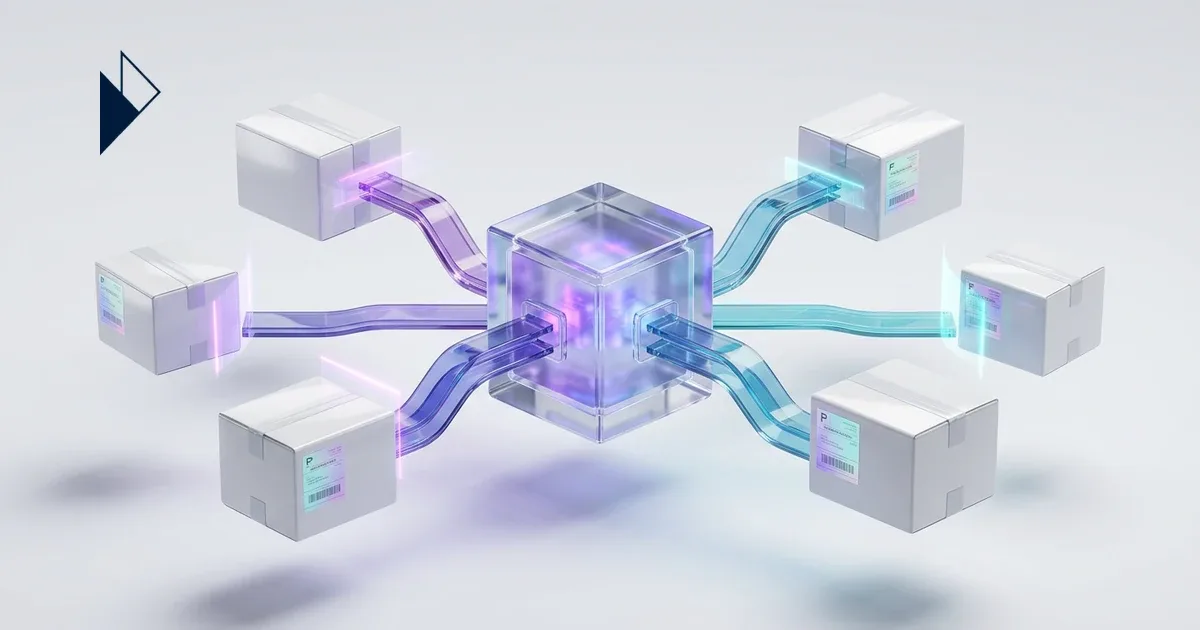
Dynamic rerouting capabilities allow the engine to shift a parcel's trajectory while it is still in motion, or immediately before dispatch, based on live signals. If Carrier A reports a weather delay in the Northeast, the system automatically tenders the remaining volume for that region to Carrier B, who operates a different hub network. Alternatively, the engine fulfills the order from a different node entirely, bypassing the affected zone.
The shopper only cares that the package arrives on the date promised at checkout. They do not care which carrier transported it or which warehouse picked it. Real-time rerouting ensures the delivery promise holds firm, insulating the consumer from backend operational friction.
The Mechanics of Dynamic Order Rerouting
Intelligent rerouting relies on deep data integration and rapid processing. The engine requires a constant feed of structured data to understand the current state of the network, ingesting carrier scans, warehouse updates, and external factors like weather or traffic patterns.
First, the system applies predictive analytics to forecast potential bottlenecks. By analyzing historical performance data against current conditions, the AI identifies which routes will likely fail before they do. If a specific carrier hub consistently delays parcels when volume exceeds a certain threshold, the system flags the risk as volume approaches that limit.
Second, the engine evaluates alternatives. The agent calculates the cost, transit time, and SLA compliance probability for every available routing option. Standardizing data across disparate carrier networks allows the AI to compare apples to apples.
Finally, the agent executes the decision. The system updates the routing instructions, generates the necessary labels, and transmits the new data to the warehouse or the carrier via API. The entire cycle—detection, evaluation, execution—happens in milliseconds.
Scaling Operations While Reducing Fulfillment Spend
Brands adopting AI-powered logistics have achieved up to 15% cost reduction, 35% lower inventory, and 65% improvement in service levels. By preventing delays and optimizing carrier selection dynamically, retailers strip wasted spend out of their fulfillment operations.
AI order management systems achieve average cost reductions of 35-45%, order accuracy improvements exceeding 95%, and customer satisfaction increases of 30-40% within the first year of deployment. When parcels arrive on time, customers return. When they do not, they defect to competitors. Real-time rerouting acts as an insurance policy for customer lifetime value.
As a brand grows, adding new regions, warehouses, and carriers exponentially increases network complexity. A static rules engine breaks under this weight, requiring constant manual updates. An AI-driven system scales naturally, learning the nuances of new routes and partners automatically. Operations expand without a proportional increase in headcount.
Standardizing Carrier Data for Intelligent Routing
Executing dynamic control requires a standardized data foundation. Perform.AI processes 100bn+ parcel updates a year, transforming fragmented logistics data into operational legibility. By maintaining 1,100+ global carrier integrations, the platform normalizes raw carrier scans into 155+ harmonized event types.
Structured data allows AI systems to read, cite, and act on delivery performance. When the data is clean and standardized, the routing engine makes accurate, split-second decisions. The platform connects checkout, post-purchase, and returns on one engine, ensuring a routing change made in the warehouse immediately updates the tracking experience for the consumer.
Catching Delays Before the Customer Notices
Perform.AI's AI Decision Intelligence catches the delay before your customer emails to ask. Instead of operators digging through spreadsheets to find failing routes, the system pushes the failing route to the operator.
Through AI Performance Alerts, the platform automatically monitors key metrics. If a carrier's on-time delivery rate drops below the contracted SLA in a specific region, the system triggers an alert. Operators use the AI Navigator capabilities to query the platform directly, finding specific shipment statuses and identifying the root cause of the delay. The team shifts from reactive firefighting to proactive network management.
Connecting Routing Rules to Customer Notifications
Identifying a better route is only half the battle; the system must execute the change. The Logistics Experience provides outbound shipment booking capabilities and routing rule engine configuration. Brands define the parameters within which the AI operates, ensuring rerouting decisions always align with business logic and cost constraints.
When an order is rerouted, the post-purchase experience ensures the customer remains informed. Through outgoing webhooks and automated notifications, the platform updates the tracking page the moment a routing change impacts the estimated delivery date. The customer sees the updated timeline proactively, preventing a "where is my order" call to the support center. The public Create, Update and GET shipment APIs ensure internal systems, like the OMS and ERP, remain perfectly synchronized with the physical reality of the parcel.
The Shifting Boundary of Fulfillment Control
As carrier networks grow more fragmented and regional delivery options multiply, the definition of a finalized order is changing. A parcel in transit is no longer a committed liability; it is a variable asset. The ability to redirect that asset mid-flight blurs the line between warehouse operations and final-mile delivery. The brands that treat transit as a dynamic state will dictate the next standard of consumer expectation, while those locked into static routes will absorb the cost of every localized failure. The mechanics of dynamic control will soon separate the networks that flow from the networks that break.
Frequently Asked Questions
What triggers an AI agent to reroute an e-commerce order?
An AI agent triggers a reroute when it detects a disruption that threatens the delivery promise. This includes real-time signals like carrier hub delays, severe weather events, capacity limits, or inventory shortages. The system uses predictive analytics to forecast these failures and shift the parcel to an alternative path before the delay impacts the customer.
How does real-time rerouting impact shipping costs?
Real-time rerouting often reduces overall shipping costs by optimizing carrier selection dynamically. When a primary route fails, the AI evaluates alternative carrier integrations to find the most cost-effective option that still meets the required SLA, preventing costly expedited shipping fees required to recover delayed parcels.
Does order rerouting confuse the customer tracking experience?
It shouldn't, provided the systems are connected. A robust Post-Purchase Experience automatically updates the tracking page and sends proactive notifications if a reroute changes the delivery date. Transparency prevents confusion and reduces inbound support tickets.
What data is required for intelligent order routing?
Intelligent routing requires clean, standardized data across the entire supply chain. This includes live inventory levels, historical carrier performance, real-time tracking events, and contracted SLA terms. Without structured e-commerce logistics data, the AI cannot accurately compare routing alternatives.
How will AI order management evolve in the next five years?
The future of AI order management points toward fully autonomous supply chains within an agentic commerce framework. Agents will not only reroute parcels but autonomously negotiate spot rates with carriers, balance inventory across micro-fulfillment centers, and resolve delivery exceptions entirely without human intervention.