5 Best Ways to Reduce Cart Abandonment in Southeast Asia
5 key strategies to reduce cart abandonment in Southeast Asia’s booming e-commerce market
Cart abandonment is a significant concern for e-commerce businesses, and understanding the factors contributing to it is crucial for improving the overall shopping experience. A recent survey conducted by Rakuten Insight Global provides valuable insights into the preferences and behaviors of Southeast Asian (SEA) customers. Here are the top five strategies to reduce cart abandonment based on the survey results:
1. Provide Clear and Precise Estimated Delivery Dates
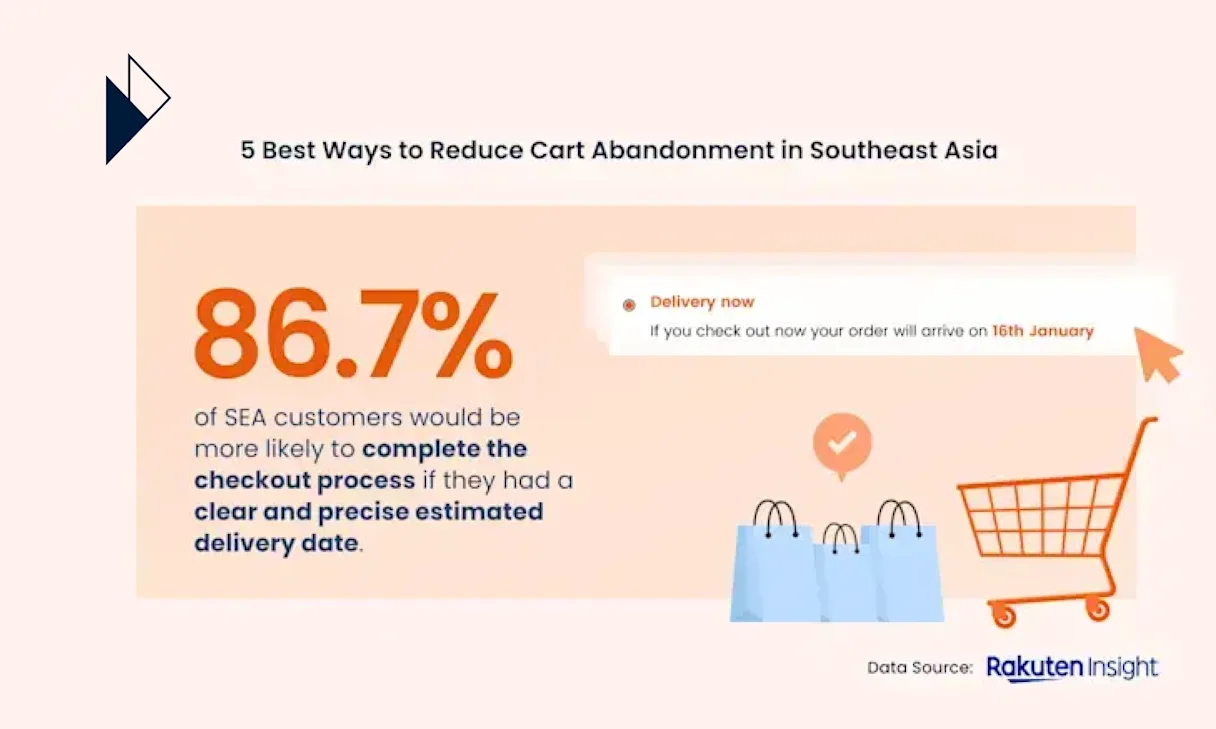
In Southeast Asia, a staggering 86.7% of customers expressed a preference for a clear and precise estimated delivery date (EDD). The preference for a specific date, including day and time details (e.g., 27 Aug 2023, Wednesday, 12 - 4 pm), significantly outweighs the preference for a broader range of dates (e.g., 27 Aug - 2 Oct 2023).
Among the countries, Vietnam stands out as a beacon of consumer preference, with an impressive 90% of customers expressing a distinct inclination to complete their checkout when armed with a clear and precise EDD. Meanwhile, Singapore follows closely behind at 89%, showcasing a meticulous demand for accurate delivery information.
The connection between clear EDDs and reduced cart abandonment is rooted in the psychology of customer decision-making during checkout. A transparent and accurate delivery timeframe not only instills confidence but also addresses uncertainties that often lead to abandoned carts. By providing customers with a concrete expectation of when their purchase will arrive, businesses alleviate concerns, creating a more positive and assured shopping experience.
2. Leverage Strategic Marketing to Counteract Better Deals
Next, a substantial 62% of Southeast Asian respondents opt to abandon their online shopping carts when presented with more attractive deals elsewhere. To effectively address this challenge, e-commerce businesses can deploy strategic marketing initiatives designed to captivate and retain their audience.
Offering exclusive discounts, loyalty programs, or personalized promotions can incentivize customers to stick with their current purchase rather than exploring alternatives. By creating a sense of value and exclusivity, businesses can retain customers who might be swayed by competing offers, ultimately reducing cart abandonment and increasing customer loyalty.
3. Be Transparent About All Costs, Including Shipping Fees
The survey also revealed that high shipping costs play a substantial role in contributing to cart abandonment, accounting for an average abandonment rate of 54% across the SEA region.
To address this challenge effectively, e-commerce businesses must prioritize transparency in communicating all costs associated with a purchase. Displaying all costs clearly and prominently throughout the shopping journey, from product pages to the final checkout, instills trust and ensures that shoppers have a comprehensive understanding of their financial commitment.
Consider providing a breakdown of costs, including product prices, taxes, shipping fees, and any additional charges. Moreover, clearly communicate any potential customs duties or import taxes for international shipments. By adopting a transparent approach to costs, e-commerce businesses can build trust with customers, reduce cart abandonment rates, and foster long-term loyalty in the competitive Southeast Asian market.
4. Build Trust through Robust Security Measures
Did you know that approximately 19% of respondents in Southeast Asia express concerns about security or privacy, leading to cart abandonment?
In response to this significant challenge, e-commerce businesses are urged to prioritize the establishment of trust through the implementation of robust security measures. The cornerstone of this strategy involves the meticulous implementation of comprehensive security measures. E-commerce platforms must invest strategically in secure payment gateways, ensuring the encryption of transactions to safeguard sensitive financial information. Transparent privacy policies play an equally crucial role, providing detailed insights into how customer data is collected, stored, and utilized. Additionally, prominently displaying recognized security badges and certifications serves as a visual testament to the unwavering commitment to maintaining a secure online environment.
In tandem with robust security measures, targeted messaging plays a crucial role in alleviating customer concerns. Proactive communication is integral to reassuring customers that their sensitive data is handled securely and that the business prioritizes privacy. This approach is designed to mitigate concerns that might otherwise lead to cart abandonment.
5. Partner With the Right Logistics Provider for Timely Deliveries
In the realm of e-commerce, the importance of optimizing delivery times through strategic partnerships with reliable logistics providers cannot be overstated. This strategy directly addresses a significant contributor to cart abandonment: long delivery times. According to Rakuten Insight Global's survey data, 35% of respondents in Asia conveyed unease regarding extended delivery durations.
Strategic partnerships with trustworthy logistics providers serve as a cornerstone in building and maintaining customer trust. By ensuring that deliveries are not only prompt but also reliable, businesses demonstrate a commitment to meeting or surpassing customer expectations. Trust is a linchpin in the decision-making process, and customers are more likely to complete transactions when they have confidence in the timely fulfillment of their orders.
Moreover, streamlining delivery times can indirectly alleviate apprehensions tied to elevated shipping expenses. Given that 54% of respondents in Asia identify high shipping costs as a factor prompting cart abandonment, a meticulously planned logistics strategy can foster cost efficiencies, empowering businesses to present competitive shipping rates without compromising the swiftness of delivery.
From Abandoned Carts to Customer Bonds in Southeast Asia and Beyond
As businesses navigate the competitive e-commerce landscape in Southeast Asia, embracing these strategies can be instrumental in not only reducing cart abandonment but also in creating lasting connections with customers. By prioritizing transparency, trust, and efficiency, businesses can position themselves for sustained success in this vibrant and evolving market.
About Rakuten Insight Global
Rakuten Insight Global, Inc. (“Rakuten Insight”) is a wholly-owned online market research subsidiary company of Rakuten Group, Inc., a global leader in internet services headquartered in Tokyo. Rakuten Insight was established in 1997 as AIP Corporation and became part the Rakuten Group in 2014. Rakuten Insight possesses a research panel focusing on 12 countries and regions in Asia & the US and a panel network covering 60 countries and regions. With offices in 11 countries and regions, Rakuten Insight provides market research for over 500 leading companies around the world. For more information visit https://insight.rakuten.com/.